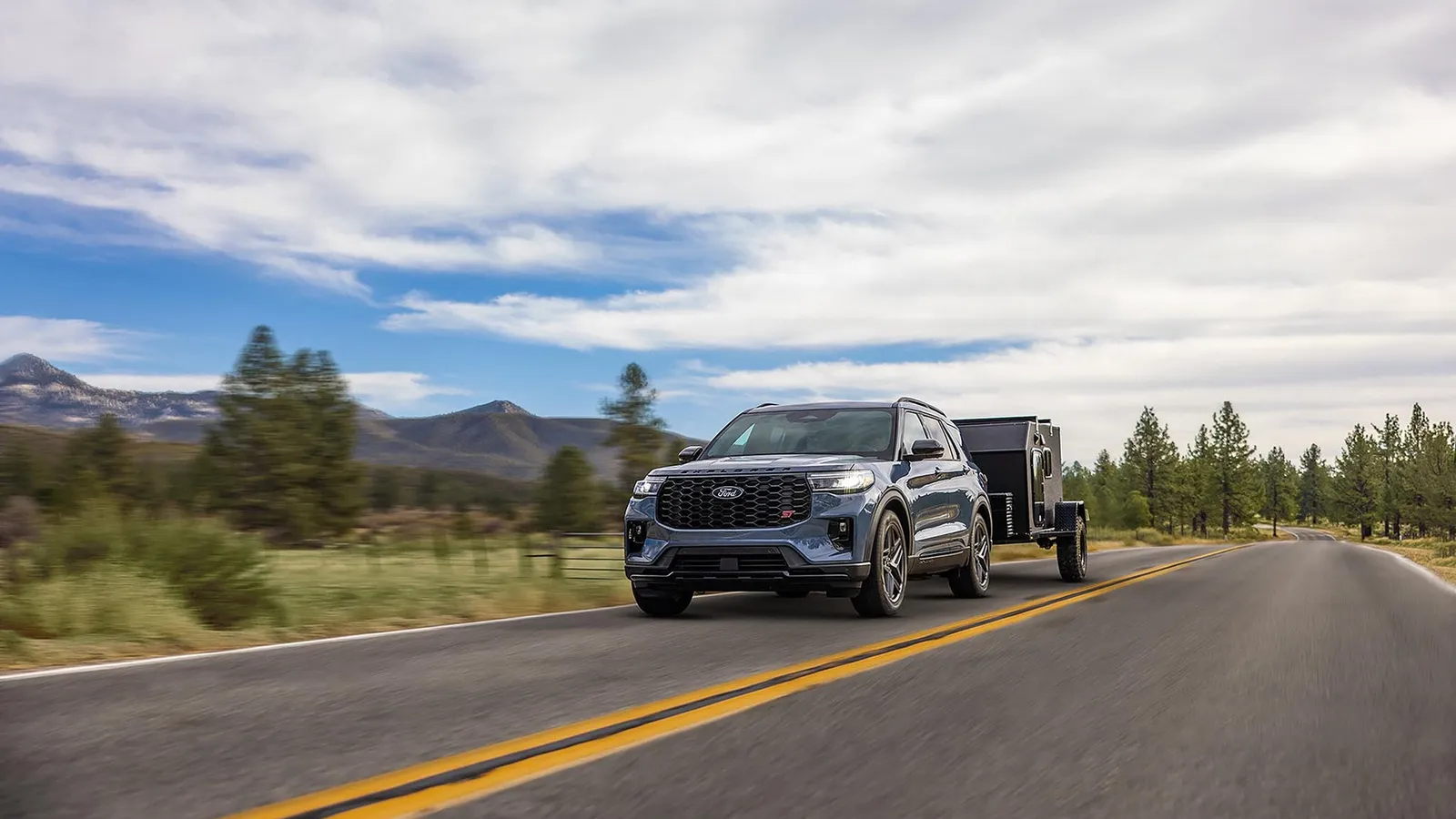
A truck may have the capability you need for work in Tacoma, while a compact SUV may make more sense for everyday drives between Puyallup, Sumner, and South Hill. Before comparing features, though, it helps to know what each choice could mean for your monthly budget. A vehicle payment calculator turns a vehicle price, down payment, trade-in, loan term, and estimated interest rate into a useful starting point.
It cannot approve a loan or quote your final payment. What it can do is help you shop with clearer expectations, whether you are comparing a Ford F-150 and a Hyundai Santa Cruz, choosing between a Lincoln Aviator and Ford Explorer, or deciding if a late-model used vehicle is the smarter fit.
What a vehicle payment calculator actually estimates
A payment calculator estimates the principal-and-interest portion of an auto loan. Enter a purchase price, subtract your down payment and trade-in value, account for any remaining payoff on your current vehicle, then choose an annual percentage rate (APR) and loan length. The calculator uses those figures to estimate what you may pay each month.
The most helpful calculators also let you include estimated sales tax, title and licensing costs, and dealer fees. Those items matter because your financed amount is not always simply the sticker price. In Washington, taxes and registration costs can change the out-the-door number enough to affect your monthly payment.
Treat the result as a planning tool rather than a promise. Your final payment depends on the specific vehicle, lender approval, credit profile, loan program, trade-in appraisal, and the products or protections you choose to include in financing.
The numbers that change your payment most
Vehicle price gets the most attention, but it is only one part of the equation. A few hundred dollars of price difference may have a smaller monthly effect than a different interest rate or loan term.
Down payment and trade-in value
A down payment lowers the amount you borrow. So does the equity in your trade-in. For example, if a vehicle costs $40,000 and you put $5,000 down, you begin with less to finance before taxes and fees.
A trade-in works similarly, but there is an important distinction: its value is not always the same as your equity. If your current vehicle is worth $18,000 but you still owe $20,000, the $2,000 difference is negative equity. Rolling that balance into the next loan raises the amount financed and, usually, the payment.
If you have a trade, use a realistic estimate in the calculator first. Then review an in-person appraisal before making a final decision. Condition, mileage, market demand, accident history, and reconditioning needs all affect value.
APR
APR is the cost of borrowing expressed as an annual rate. A lower APR generally means less interest over the life of the loan, and it can lower the monthly payment as well. The rate you qualify for may depend on credit history, income, loan term, vehicle age, down payment, and current lender or manufacturer offers.
When comparing two payment estimates, keep the APR the same unless you have a reason to change it. Otherwise, it is easy to mistake a lower rate for a lower vehicle price. If you are considering a new Ford, Hyundai, or Lincoln alongside a used option, ask which financing programs apply to each choice. New and used vehicles can carry different rates and terms.
Loan term
A longer loan term usually creates a lower monthly payment because the balance is spread across more months. That may help a family fit a larger SUV or pickup into its monthly budget. The trade-off is that you generally pay more interest over time and may build equity more slowly.
A shorter term raises the payment but can reduce total interest. Neither choice is automatically right. A buyer who plans to keep a vehicle for many years may prioritize lower total borrowing cost. Someone replacing a vehicle after a costly repair or managing a strict monthly budget may need the predictability of a longer term. The key is to compare both the payment and the total amount paid.
How to use a vehicle payment calculator while cross-shopping
Start with a payment range that feels comfortable after housing, insurance, fuel, maintenance, groceries, savings, and other regular expenses. Then work backward. Instead of asking only, “What payment does this vehicle have?” ask, “What vehicle and loan structure fit the payment I can responsibly manage?”
Next, run the same assumptions across the vehicles on your list. Use the same down payment, estimated APR, and loan term for each model. That makes the comparison more meaningful.
A Ford F-150 may cost more to purchase than a Hyundai Santa Cruz, but capability is part of the value equation. Towing needs, bed size, passenger space, and job-site use could justify the difference. On the other hand, a Santa Cruz may be a practical choice for a driver who wants open-bed versatility with easier daily maneuvering and potentially lower fuel costs.
The same applies to three-row SUVs. A Lincoln Aviator may appeal to shoppers looking for premium appointments and a more refined ride, while a Ford Explorer may offer the space and utility their household needs at a different price point. The calculator does not choose for you. It gives you a consistent financial lens for evaluating what each vehicle provides.
New versus used: compare more than the sale price
A used vehicle often has a lower purchase price, which can produce a lower payment. But the full comparison may be more nuanced. Used-loan rates can be higher than rates on certain new-vehicle offers, and a vehicle with higher mileage may have different expected maintenance needs over time.
A new vehicle can bring current safety technology, warranty coverage, and available promotional financing. It may also depreciate more quickly in the first few years. A used model can offer strong value, especially if it has the features you want and a documented service history. Your budget, anticipated ownership period, and preference for warranty coverage all play a role.
When using the calculator, create separate scenarios rather than relying on one estimate. Compare a new vehicle at a possible promotional APR, a newer used model with lower mileage, and a more budget-focused used option. Include an insurance estimate for each before settling on a target payment. Premium trim levels, luxury vehicles, and performance-oriented models may cost more to insure.
Costs a payment calculator may not capture
A monthly loan payment is only part of vehicle ownership. For a realistic budget, leave room for insurance, fuel or charging, routine maintenance, tires, repairs outside warranty, and annual registration costs.
Capability and configuration can influence these expenses. A larger truck may use more fuel and require more expensive tires than a compact crossover. A premium SUV may deliver a different ownership experience, but its parts, insurance, and service requirements can reflect that positioning. Factory-trained service and a straightforward maintenance plan can help you prepare, but they do not eliminate every ownership cost.
Also consider the value of features that make your regular drives easier: all-wheel drive for wet Pacific Northwest weather, third-row seating for carpools, towing equipment, driver-assist technology, or a comfortable cabin for a long commute. The lowest payment is not always the best value if the vehicle does not meet your actual needs.
Questions to bring to the financing conversation
A calculator makes it easier to have a productive financing discussion because you already understand your preferred range. Be ready to ask about the out-the-door price, available APR options, loan terms, estimated taxes and fees, your trade-in value, and whether negative equity is included in the loan.
You can also ask to see more than one structure. For instance, compare 60 and 72 months with the same down payment, or see how an additional $1,000 down changes the payment and total interest. A clear breakdown helps you make a decision based on facts rather than focusing only on one monthly number.
For Pierce County drivers, the most useful next step is to use your estimates to narrow the search, then compare new and used inventory in person. Korum Automotive Group can help you look across Ford, Hyundai, and Lincoln options, review financing possibilities, and keep your vehicle cared for after the purchase. A payment estimate should make the shopping process feel more confident, not more complicated.
Frequently Asked Questions
Does a payment calculator include Washington sales tax?
Some calculators let you add sales tax and fees, while others estimate only principal and interest on the price you enter. If yours does not include them, add estimated Washington sales tax, title and registration costs to the vehicle price first. Asking for an out-the-door quote gives you the most realistic number to plug in.
Why might my final payment differ from the calculator estimate?
Your final payment depends on lender approval, your credit profile, the exact rate and term offered, the appraised value of your trade, taxes, fees and any optional protection products you choose. Rebates or special financing may also apply to some vehicles and not others. Treat the estimate as a planning range and ask to see the full breakdown.
Is a longer loan term worth the lower monthly payment?
Sometimes. A longer term can make a needed vehicle fit your budget, but you pay more interest overall and build equity more slowly. If you trade vehicles often, that slower equity can carry negative equity into your next loan. Compare the total cost of two or three terms side by side before you choose.
Can I start the financing process online with Korum Automotive Group?
Yes. You can use the payment calculator on the Korum website, check your buying power, and submit a secure financing application before you visit. The finance team can then review options for Ford, Hyundai, Lincoln and used vehicles so your time at the Puyallup dealership focuses on choosing the right vehicle.