Korum Automotive Group

Blog

2027 Ford Explorer: ST Sinister, Tremor and the V6 Lineup Explained for Puyallup Families

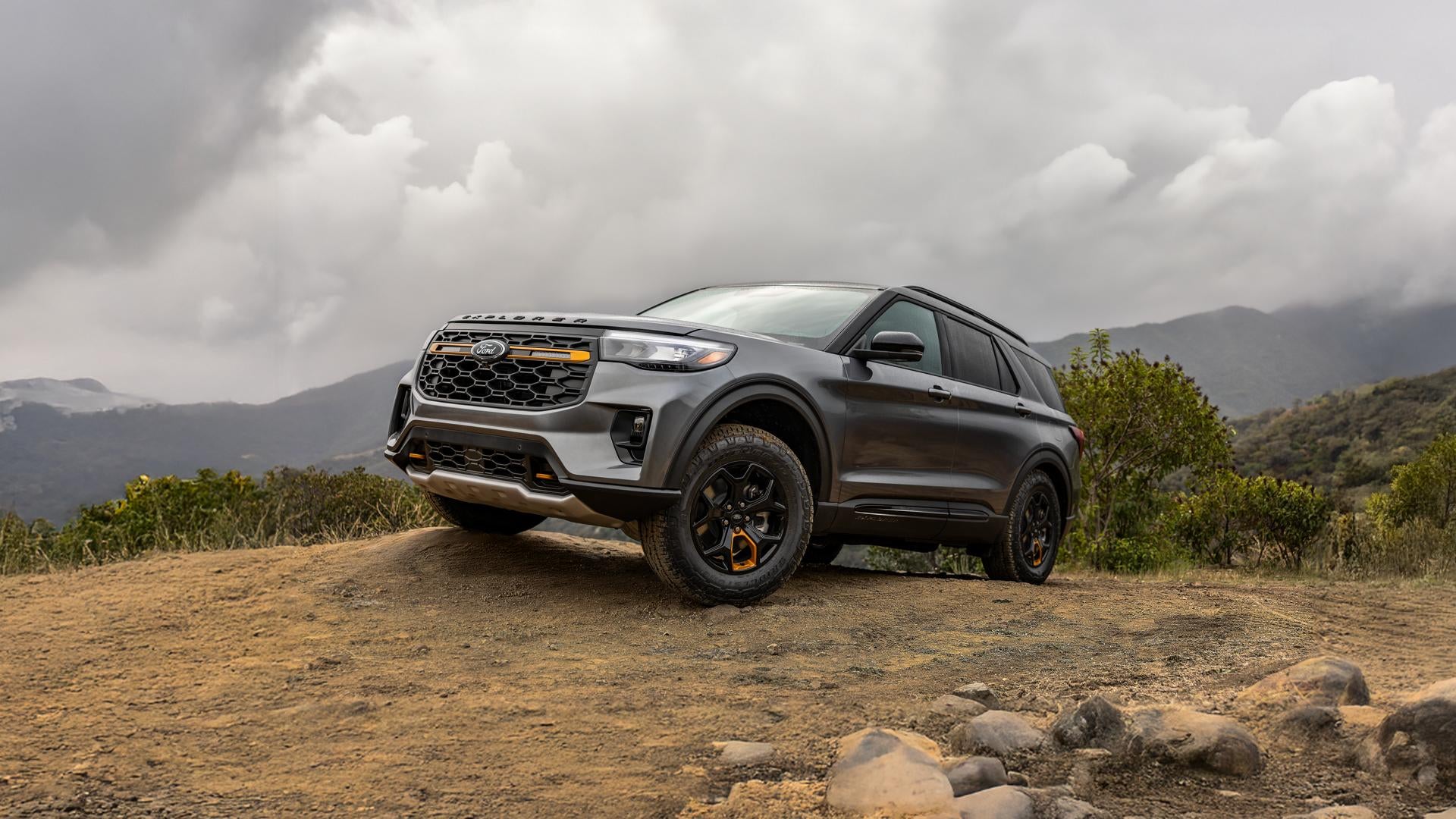
Gray Ford Explorer Tremor with orange accents parked on a dirt hillside under cloudy skies

By Korum Automotive Team · Published November 17, 2026

The 2027 Ford Explorer page on ford.com lists Active, ST-Line, Tremor, Platinum and ST models. It points to a new ST Sinister Package, a V6 option on Platinum and new colors. For Puyallup shoppers, one detail matters more than the rest. Ford's page shows a V6 rating of up to 400 hp, but it also carries a notice that names Washington and gives lower ratings for vehicles sold here. This guide walks through the lineup, the Sinister Package, the Tremor and the V6 numbers so you know what to ask on a test drive.

The 2027 Ford Explorer Lineup at a Glance

Ford's Explorer page is not dated, but it is headed 2027 Ford Explorer and includes a What's new section. It gives no on-sale date, so read it as Ford's description of the 2027 model year, not as a delivery schedule. Ford sums up the range by calling the ST sporty, the Tremor wilderness-loving and the Platinum luxurious and feature-packed. Here is how the trims break down.

TrimEngineWhat Ford highlights
Active2.3L EcoBoostPower liftgate, black roof-rack side rails, heated front-row seats
ST-Line2.3L EcoBoostBlack exterior accents, blackout treatment on the headlamps and taillamps, B&O sound system
Tremor2.3L standard, 3.0L V6 availableOff-road-tuned suspension, all-terrain tires, standard Intelligent 4WD
Platinum2.3L standard, 3.0L V6 availableHeated, ventilated, massaging front seats with leather inserts, adaptive headlamps
ST3.0L twin-turbo V6Sport-tuned suspension, performance brakes with red-painted calipers, quad-tipped exhaust

What Ford lists as new for 2027

  • ST Sinister Package: Ford calls it a brand-new dark appearance package for ST, with an exclusive wheel style and amber accent lights.
  • V6 on Platinum: Platinum can be upgraded with the available V6 engine, which also brings quilted leather seating surfaces and an exclusive wheel style.
  • Tremor Sun and Sound Package: Tremor models with the V6 can now add this package. It includes an upgraded B&O sound system, massaging front seats and a power moonroof.
  • New colors: Ford lists two new colors, Avalanche Gray and Ruby Red Metallic Tinted Clearcoat.
  • Roof choices: Active, ST-Line, Platinum and ST can delete the standard roof rails with the Slick Roof Conversion option. All models offer the available panoramic Vista Roof with power shade.

Matching a trim to your week

Active and ST-Line suit everyday family driving. Both use the 2.3L engine, they share the same cargo figures, and Ford lists a 13.2" center display on both. ST-Line adds a darker, sportier look with black exterior accents and a blackout treatment on the headlamps and taillamps. If the 2.3L's 300 hp rating is plenty for your commute, start with these.

Platinum is the comfort trim. Ford lists heated, ventilated, massaging front seats with leather inserts and adaptive headlamps, and Platinum can now be paired with the V6. If your family spends long stretches in the car, the front seats are worth an extended sit.

ST is the sport trim and the only one where the V6 is standard. It is also the trim that carries the new Sinister Package.

Tremor is the trail trim. It has the highest ground clearance Ford lists, includes Intelligent 4WD as standard and seats six.

Seats, Cargo and Towing Across the Whole Lineup

Family use is where the shared basics matter. Ford says Explorer SUVs seat six or seven people, depending on the model and options. Second-row captain's chairs are standard on every model for six passengers. A second-row bench seat that brings the total to seven is available on all models except Tremor. Every Explorer has third-row seats, and PowerFold third-row seats are standard on ST and Platinum and available on Tremor.

The third row is the part to test in person. Sit in it, check the headroom and leg room, and see how easily a passenger gets in and out past the second row. A spec sheet cannot tell you whether the seat works for the people you carry, and a minute in the seat can.

Behind the third row, Ford lists 16.3 cubic feet of cargo space with all seats in place. With the seats folded, the maximum is 85.8 cubic feet on Active and ST-Line and 85.3 cubic feet on Tremor, Platinum and ST. Those numbers help you compare, but the real test is your own gear. Bring the stroller, the sports bags or the cooler you carry most often. Whether your week is school drop-offs in Sumner, practice in Spanaway or a commute toward Tacoma, load it up and see how the rows work for you.

Towing is the same across the lineup on paper. Ford says you can tow up to 5,000 lbs with any Explorer model, thanks to the standard trailer tow package. If you pull a small boat or utility trailer around Pierce County, confirm the hitch and wiring on the exact vehicle you drive. Ford also lists six drive modes per model. They include Normal, Eco, Sport, Tow/Haul and Slippery, plus either Trail or Off-Road depending on the model.
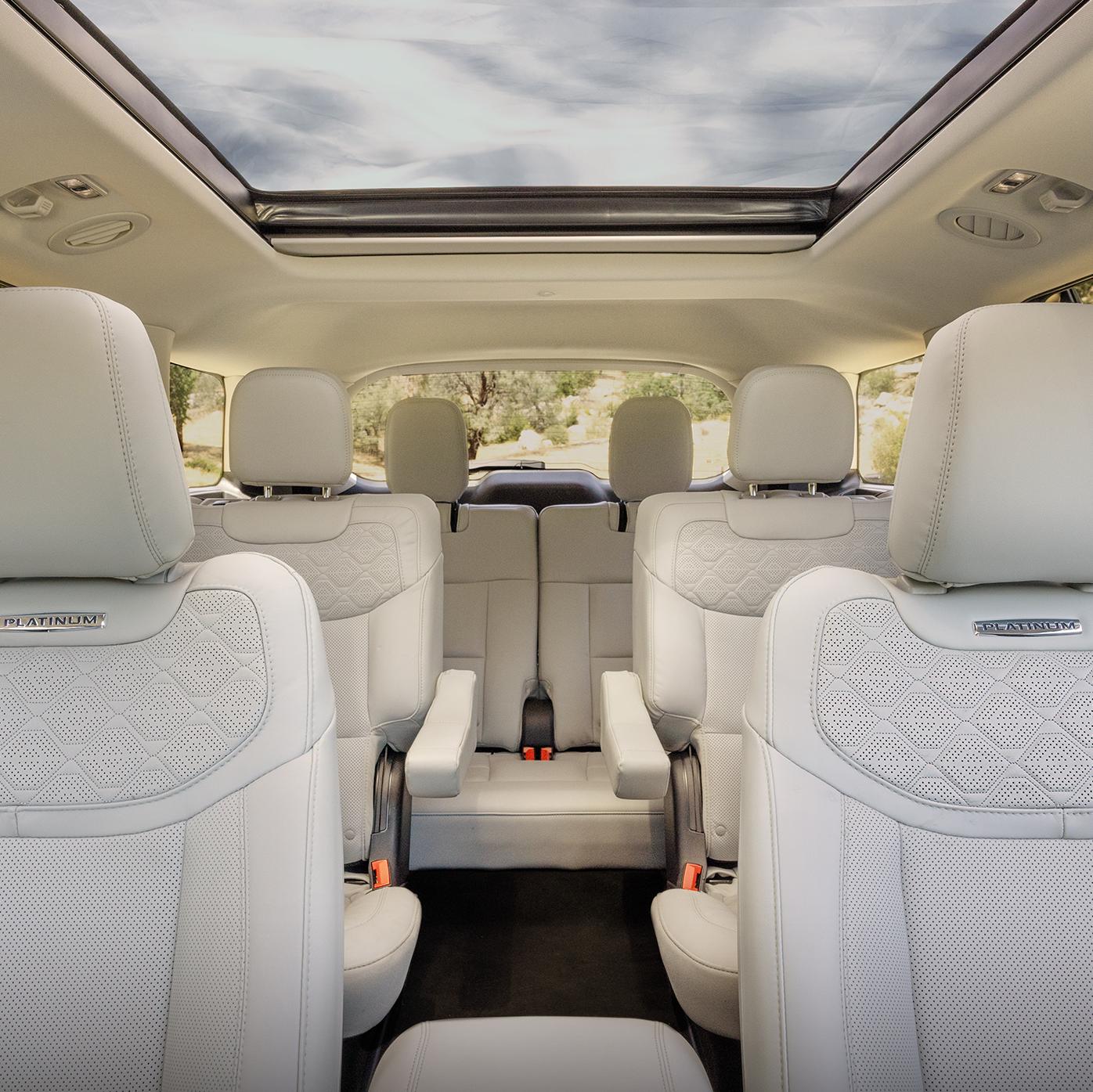
Cream leather three-row interior of a Ford Explorer Platinum with a panoramic roof

The 3.0L V6 in Washington: Which Horsepower Number Applies

The V6 is where the lineup gets confusing, so here is the plain version. Ford's twin-turbo V6 is standard on ST and available on Tremor and Platinum. The 2.3L EcoBoost engine is standard on Active, ST-Line, Tremor and Platinum, and Ford says it delivers 300 hp and 310 lb-ft of torque.

For the V6, Ford's headline says up to 400 hp and 415 lb-ft of torque. That 400 hp number is the one you will see in many ads and search results, and it does not apply everywhere. Ford's page says the rating depends on the state where the vehicle is purchased. It carries a notice to customers in a list of states that includes Washington. The notice says vehicles sold in those states are required by law to include the emissions system as standard equipment, and that vehicles with that system and the V6 have a different maximum horsepower rating. Ford gives 385 hp for Tremor and ST models and 383 hp for Platinum models.

In plain terms, because Washington is on Ford's list, the V6 ratings that apply to Explorers sold in Puyallup are 385 hp for Tremor and ST and 383 hp for Platinum, not 400 hp. Ford's page tells you to see your Ford dealer for details. Ask the Korum Ford team to confirm the rating for the exact vehicle you are considering. Even at the Washington figures, the V6 is rated above the 2.3L's 300 hp.

If you see 400 hp quoted in a review, an ad or a video, check which state the vehicle was sold in. Ford's own page says the rating depends on it. That one question can save you from comparing a Washington Explorer with a number that was never meant for it.

ST Sinister Package: What Ford Says It Adds

The Sinister Package is the headline addition for Explorer ST. Ford invites ST shoppers to express their inner darkness with it and describes it as an enthusiast-inspired appearance package. Ford says it includes 21" Gloss Black-painted wheels, unique accent lighting and ST badges outlined in black. The package list on Ford's page adds all-season tires and amber LED daytime running lamps.

Notice the word appearance. Ford says ST offers sport-tuned suspension, performance brakes and 21" wheels. The Sinister Package lists 21" wheels too, so what changes is the finish, the lighting and the badging. Ford's page does not list any change to the engine, brakes or suspension with the package.

A couple of practical points come with that. Western Washington is wet for much of the year, so ask which tires come with the package and how they fit the roads you drive. A separate winter set is worth a conversation. Also, Ford calls the package available, not standard. Ask the team whether any ST with the Sinister Package is listed, because the page does not say.

Explorer Tremor: Built for Gravel Roads and Trailheads

Ford describes the Tremor as trail-tested. The page lists steel deflector plates, off-road-tuned suspension and a Torsen limited-slip rear axle that is exclusive to the model. Tremor rides on 18" black wheels with all-terrain tires and has a selectable Off-Road drive mode. Ford says Tremor includes Intelligent 4WD as standard equipment, while Active, ST-Line, Platinum and ST can be upgraded to it.

Ford's spec table shows how the Tremor is set apart. Its minimum running ground clearance is 8.7" compared with 7.6" for Active and ST-Line. Its approach angle is 24.1 degrees compared with 19.7 degrees for Active, ST-Line and ST. A higher front end and a steeper approach angle matter on rutted gravel forest roads and uneven trailhead parking lots in the Cascade foothills.

The trade-offs are simple. Tremor seats six, because the second-row bench is not offered on it. The V6 is available, and with it you can now add the Sun and Sound Package. Ford's third-quarter sales release says combined year-to-date sales of the Explorer Tremor and Platinum series increased 59.9%, so both trims are finding buyers. If you want a taller, more capable Explorer for weekend trips, drive a Tremor on roads you know, including the highway, before you decide.

What Ford's Page Does Not Say About 2027

A model page is not a press release, and this one leaves gaps. Here is what you will not find on it.

  • An on-sale date or a date when any trim reaches Korum Ford
  • Fuel economy ratings for the engines
  • A full list of changes from the previous model year beyond the What's new section
  • Which trims, packages and colors are in stock at a given store

The page also carries pricing tools and offers. This article leaves them out because they change, so ask the team for current numbers on the exact Explorer you want. Ford's sales release says Explorer sales increased 17.6% through September, which tells you the SUV is popular. It does not tell you what is on the lot, so check inventory first.

Drive an Explorer at Korum Ford and Compare the Trims

The clearest way to sort the lineup is to drive trims back to back. Try a 2.3L Active or ST-Line, then a V6 ST or Tremor, and notice the difference. Browse the new Ford inventory on the Korum website to see which Explorers are listed, then ask the Korum Ford team to line up the trims you want to compare and to confirm the horsepower rating on each V6.

Questions to Bring to Your Explorer Test Drive

A short list keeps the visit focused. Print it or save it on your phone.

  • Which engine does this Explorer have, and what horsepower rating applies in Washington?
  • Does it have second-row captain's chairs or a bench seat, and how does the third row fit my family?
  • What drive type does it have, and what tires are on it?
  • If it is an ST, is the Sinister Package on it?
  • If I tow, what hitch and wiring does it have, and how does Tow/Haul mode feel?

If you want to sort out financing before you visit, you can start a credit application online. If you already own an Explorer, schedule service when a visit is due. If you want to compare against an earlier model year, look through pre-owned inventory.

For more, see the dealership's aboutus.aspx pages.

Helpful pages from the dealership include its specials, schedule service and certified pre-owned pages.

You can also see its parts and service pages.

Frequently Asked Questions

What is new on the 2027 Ford Explorer?

Ford's Explorer page lists a new ST Sinister Package, a V6 option on Platinum and the Sun and Sound Package for V6 Tremor models. It also lists two new colors, Avalanche Gray and Ruby Red Metallic Tinted Clearcoat. Ask the Korum Ford team which of these are available on the Explorers they have listed.

How much horsepower does the Explorer V6 make in Washington?

Ford's page lists 385 hp for Tremor and ST models and 383 hp for Platinum models in states where the required emissions system applies, and Washington is on that list. The page shows up to 400 hp for other states. Ask the team to confirm the rating for the exact vehicle.

What does the Explorer ST Sinister Package include?

Ford describes it as an appearance package for ST with 21" Gloss Black-painted wheels, unique accent lighting and ST badges outlined in black. Its list also shows all-season tires and amber LED daytime running lamps. Ford's page does not list any engine or suspension change.

Which Explorer trims offer the V6?

Ford says the twin-turbo V6 is standard on ST and available on Tremor and Platinum. The 2.3L engine is standard on Active, ST-Line, Tremor and Platinum. Ford lists it at 300 hp.

How much can the 2027 Explorer tow?

Ford says you can tow up to 5,000 lbs with any Explorer model, thanks to the standard trailer tow package. If you tow regularly, ask the team to confirm the hitch and wiring on the exact vehicle.

Sources (as of October 30, 2026)

Customer is responsible for sales tax, title, and license fee. A negotiable $200 documentation fee may be applied.
Recommended Posts

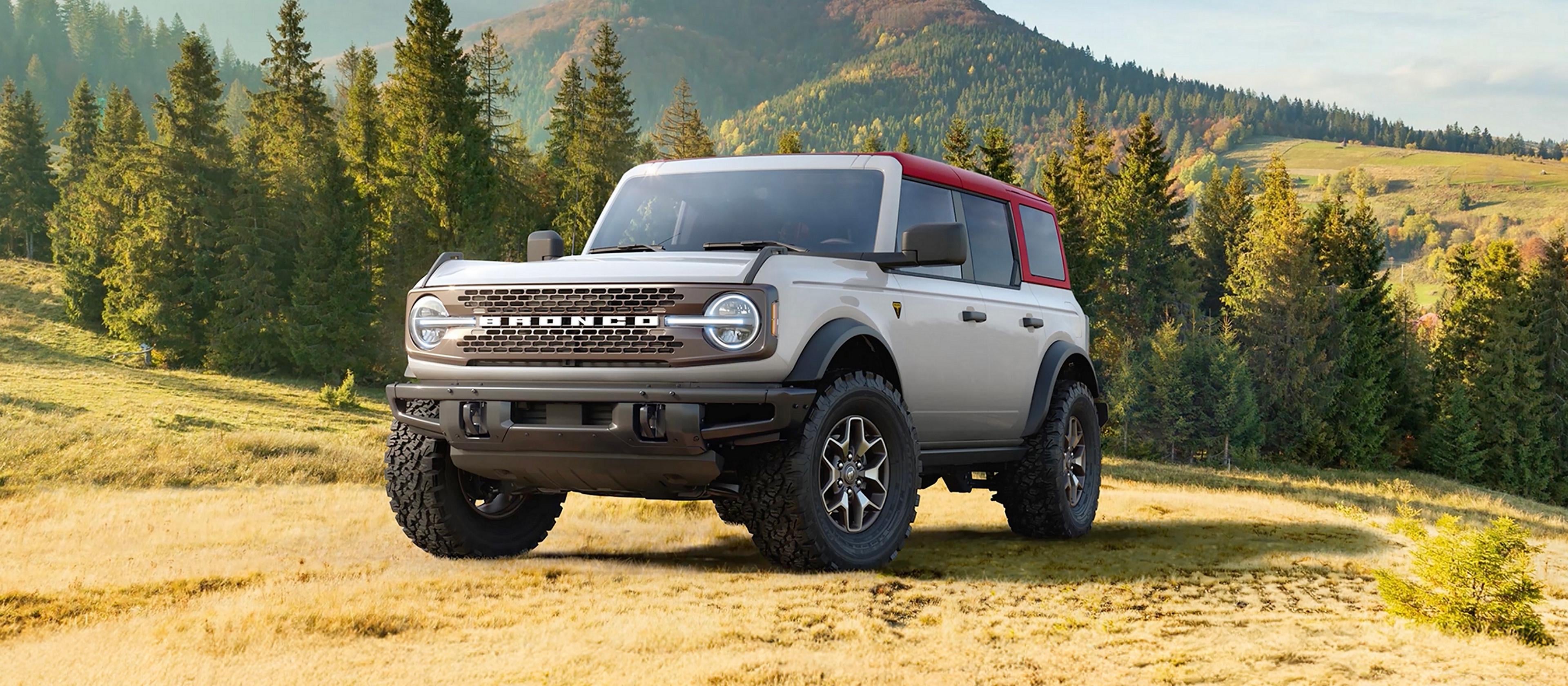
A 2026 Ford Bronco® SUV parked on a grassy hillside in the mountains, exterior view

Used Cars Near Me: A Test Drive and Inspection Checklist for Puyallup Shoppers

By Korum Automotive Team · Published November 17, 2026 A search for used cars near me usually ends with a short list and a trip to the lot. What you do in the next hour matters more than anything you read online. This checklist is built for shoppers in Puyallup and the surrounding South Sound, and it walks you through the walkaround, the cabin, the test drive and the paperwork so you leave with clear answers instead of a gut feeling. Section Key point Before You Leave Home: Prep Work for Used Cars Near Me A little planning keeps the visit short and focused. Under the Hood and Underneath You do not need to be a mechanic to learn something useful here. Plan a Test Drive Route Around Puyallup A loop around the block will not tell you enough. After the Drive: Paperwork and Questions Park, turn off the engine and take a few minutes to review what you found. Before You Leave Home: Prep Work for Used Cars Near Me A little planning keeps the visit short and focused. Most problems with a used car purchase start with a rushed visit, so give yourself time. Confirm the vehicle is still there. Popular used vehicles can sell within days. Call ahead, give the stock number or VIN from the listing and ask which location has the car. At Korum, used vehicles may sit at the Pre-Owned lot on North Meridian or at one of the brand stores on River Road, so this one call can save you a second drive. Pick a daylight time slot. Paint flaws, dents and fluid leaks are much easier to spot in daylight. Overcast Puyallup afternoons are fine, since flat light shows panel waves well. Try to avoid a visit right after a heavy rain, when water beads can hide scratches. Pack a small kit Driver's license and proof of insurance A small flashlight, even on a bright day A penny for a quick tire tread check Paper towels to check fluid color Your phone, for photos of the window sticker, VIN and any damage Car seats, if you will carry young kids Write down what you want to test. Make a short list of the things that matter most to you before you arrive. Maybe it is rear seat legroom for teenagers, a hitch for a small trailer or a phone mirroring feature you use every day. With the list in hand, you will remember to check those items instead of getting distracted by a nice paint color. Rank your must haves and your nice to haves so you know where you can be flexible. The Walkaround: What to Look for Outside. Walk around the vehicle slowly, twice. The first lap is for the big picture. The second lap is for details. Body and paint. Crouch at each corner and look down the side of the car. Ripples, mismatched color or overspray on rubber trim can point to past body work. Body work is not always a deal breaker, but it is a reason to read the history report closely. Check the gaps between the hood, doors and fenders. They should be even from top to bottom. Glass and lights Look for chips in the windshield, especially in the driver's line of sight. Turn on the headlights, high beams, turn signals and brake lights with a helper. Foggy or yellowed headlight lenses reduce night visibility, which matters during long, dark Northwest winters. Tires. Tires tell you a lot about how a vehicle was cared for. NHTSA says tires should be replaced when tread wears down to 2/32 of an inch, and it describes a simple penny test: place a penny in the tread with Lincoln's head upside down, and if you can see the top of his head, the tire needs replacing. Check every tire, including the inside edges. Even wear across the tread is a good sign. Wear on one edge can mean an alignment problem. Wear in the center can mean the tires were overinflated. Different brands on each corner may mean tires were replaced one at a time. Wheels and suspension. Look at each wheel for curb rash or bends. A bent wheel can cause a vibration you will feel at highway speed. Push down hard on each corner of the vehicle and let go. It should rebound once and settle. If it keeps bouncing, the shocks or struts may be worn. Also look at how the vehicle sits on level ground. One corner sitting lower than the others is worth asking about. Under the Hood and Underneath You do not need to be a mechanic to learn something useful here. Ask the salesperson to pop the hood with the engine cold. Fluids. Pull the oil dipstick if the engine has one and wipe it on a paper towel. Oil should look amber to dark brown, not milky or gritty. Look at the coolant reservoir for a clean color and a level between the marks. Many newer vehicles have sealed transmissions, so do not worry if you cannot find a transmission dipstick. Belts, hoses and battery Look for cracked belts, swollen hoses and white or green crust on the battery terminals. Ask when the battery was last replaced. Batteries tend to fail in cold snaps, and a fresh one is worth knowing about. Leaks and the underside. Shine your flashlight under the engine and along the frame. Fresh drips, wet spots or heavy rust on brake lines are worth asking about. A vehicle that spent years in a snowy state with salted roads may show more underbody corrosion than one that stayed in western Washington. Inside the Cabin. Sit in every seat you plan to use. A car can drive well and still be wrong for you if the seats or controls do not fit. Smell and moisture. Our wet climate makes this step important. A musty smell, damp carpet or fog inside the windows can point to a water leak from a door seal, sunroof drain or windshield. Press on the carpet in the footwells and lift the cargo floor to check the spare tire well. Startup and warning lights. When you turn the key or press the start button, every dash light should glow briefly and then go out. A warning light that stays on, or one that never lights at all, needs an explanation. Controls and comfort Run the heat, the air conditioning and the front and rear defrost. Fast defrost matters on cold, damp mornings. Test every window, lock, mirror and seat adjustment. Pair your phone and try a call through the speakers. Check the backup camera image for clarity. Fold the rear seats and confirm the latches work. Cargo area and spare. Open the liftgate or trunk and check that it opens and closes smoothly, including any power function. Look for the jack, the lug wrench and the spare tire or the tire repair kit, since some vehicles come with one and not the other. Make sure the cargo cover and any floor panels are present. If you haul sports gear or a big dog, bring a tape measure and check the opening height. Plan a Test Drive Route Around Puyallup. A loop around the block will not tell you enough. Ask for a drive that covers the kind of roads you use every week. In and around Puyallup, that is easy to do in 20 to 30 minutes. Start cold if you can Ask the salesperson not to warm up the car before you arrive. A cold start reveals rough idling, slow cranking and noises that fade once the engine is warm. City streets. Stop and go traffic shows how smoothly the transmission shifts at low speed. Listen for clunks as you pull away from lights and feel for any shudder. A hill. Puyallup has plenty of grades, and a climb toward South Hill is a fair test. The engine should pull steadily without hesitation. On the way down, the brakes should feel firm and the car should stop straight without pulling. A highway merge. If time allows, get on Highway 512 or Highway 167 for a short stretch. Accelerate firmly up the ramp. At cruising speed, check for vibration in the steering wheel, wind noise around the doors and how well the car tracks straight. A parking lot Finish with slow, full lock turns in both directions. Clicking or grinding during tight turns can point to worn front axle joints. Back into a space to test the camera and sensors. Turn the radio off. Music hides a lot. Drive with the audio off and the windows up for most of the route, then crack the windows for a minute at low speed. Listen for squeaks over bumps, a hum that rises with speed, a whine that changes with engine speed or a squeal when you brake. Ask your passenger to listen from the back seat too, since some sounds only reach the rear. Driver assistance features. If the vehicle has adaptive cruise control or lane keeping assist, ask how to switch them on and try them on the highway. Make sure they work the way the listing says they do. After the Drive: Paperwork and Questions. Park, turn off the engine and take a few minutes to review what you found. Then ask for the documents. Vehicle history report. Look for accidents, title brands, number of owners and gaps in service. Recall status. Enter the 17-character VIN in NHTSA's free recall lookup to check for unrepaired safety recalls. Reconditioning list. Ask what the dealer replaced or repaired before the car went on sale. Certification checklist. If the car is factory certified, ask to see the completed inspection form. Ford's Blue Certified program, for example, requires a 139-point inspection. Return or exchange terms. Ford lists a 14-day or 1,000-mile money back guarantee, whichever comes first, on its certified vehicles. Ask what terms apply to the exact car you are buying, since programs differ. If you like the car but want another opinion, ask whether you can arrange an independent pre-purchase inspection. It is a small step that can bring real peace of mind. Comparing two finalists. If you are torn between two vehicles, drive them back to back on the same route on the same day. Then write a quick score for each on comfort, visibility, noise, power, cargo room and the features you listed at home. Add what you learned from the paperwork, such as service history and remaining coverage. Seeing the scores side by side often makes the choice obvious. If it does not, sleep on it. A good used vehicle is worth one more night of thought. Schedule a Test Drive at Korum in Puyallup When you are ready to put this checklist to work, browse Korum's used inventory, save your favorites and call ahead so the vehicles are ready when you arrive. If you want to know your budget before the drive, you can start the finance application online. You can also learn more about the group on the Korum Automotive website. A test drive in Puyallup with this list in hand will tell you far more than any photo. Your Quick Checklist Call ahead and confirm the vehicle and location. Walk around twice in daylight and check every tire. Look under the hood and under the car with a flashlight. Sniff for mildew and check carpets for moisture. Watch the dash lights at startup. Drive city streets, a hill, a highway and a parking lot. Ask for the history report, recall check and reconditioning list. For more, see the dealership's new inventory, schedule service and aboutus.aspx pages. Helpful pages from the dealership include its specials and schedule service pages. You can also see its parts and service pages. Frequently Asked Questions How long should a used car test drive be? Plan on 20 to 30 minutes of actual driving. That is enough time to cover city streets, a hill, a short highway run and a parking lot. If you are deciding between two vehicles, drive them back to back on the same route. Can I bring my own mechanic to look at a used car? Many dealers allow an independent pre-purchase inspection if you ask in advance. Call ahead to arrange the timing and location. It is a good idea for any vehicle that is not factory certified. What should I do if a warning light stays on during the test drive? Note which light it is and ask the dealer to scan for codes before you go further. Some lights point to minor issues, and others need repair before purchase. Do not sign until you understand the cause and what will be done about it. How can I tell if a used car has had water damage? Check for a musty smell, damp carpet, rust on seat bolts and fog inside the windows. Lift the cargo floor and look in the spare tire well for standing water or a waterline. The history report may also show a flood title brand. Should I test drive a used car in the rain? Yes, if that is when you can go. Rain lets you test the wipers, the defroster and how the tires grip on wet pavement, which matters in western Washington. Just plan a second look at the paint in dry weather if you can. Sources (as of October 20, 2026) Ford Blue Advantage Certified Used Vehicles (as of October 20, 2026) Certified Pre-Owned Cars | Korum Automotive (as of October 20, 2026) Customer is responsible for sales tax, title, and license fee. A negotiable $200 documentation fee may be applied.

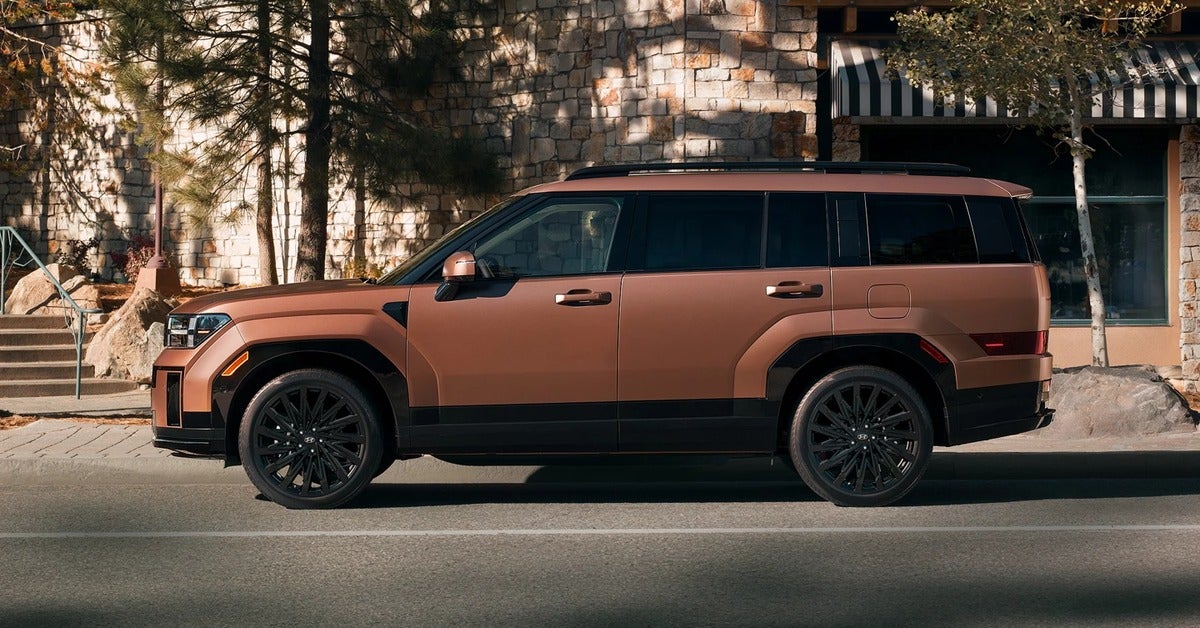
Current Hyundai Santa Fe in copper shown in side profile beside a stone building

Hyundai Santa Fe EREV: What Puget Sound Drivers Should Know About Hyundai's First Extended Range EV

By Korum Automotive Team · Published October 30, 2026 The Hyundai Santa Fe EREV will be Hyundai's first extended-range electric vehicle, and Hyundai says it will be built in the United States at Hyundai Motor Manufacturing Alabama. The company says the new Santa Fe EREV will arrive in the first half of 2027 and is expected to deliver more than 600 miles of total range. That range is an expectation, not a certified number, and Hyundai's announcements do not yet include trims, charging details or an on-sale month. This guide explains what an EREV is, how to read the numbers Hyundai has given, and what South Sound drivers can test drive at Korum Hyundai in Puyallup today. Hyundai Santa Fe EREV: What Hyundai Has Announced The details come from a pair of Hyundai releases. The first covers Hyundai Motor Company's 2026 CEO Investor Day, held in Seoul in August. There Hyundai said it will launch its first extended-range electric vehicle and named the Santa Fe as the model. The second is an October release from Hyundai Motor Manufacturing Alabama, the Montgomery plant that already builds Santa Fe models. Here is what Hyundai has said, with nothing added. Arrival: The new Santa Fe EREV will arrive in the first half of 2027. Hyundai did not name a month, and it did not say when the vehicle will reach any dealership. Range: The Santa Fe EREV is expected to deliver more than 600 miles of total range. Hyundai says that combines an EV-like daily driving experience with an answer to range and charging anxiety. Where it is built: The vehicle will be built in the United States at Hyundai Motor Manufacturing Alabama. Battery: Hyundai says the EREV uses less than half the battery capacity of a comparable EV while delivering equivalent battery performance and EV driving dynamics. Notice the word "expected." Hyundai gave the range ahead of launch. Treat it as a target until the federal fuel economy label for the production vehicle is published. Nothing in the releases says the Santa Fe EREV is on sale, and nothing says Korum Hyundai has it or has a date for it. EREV, Hybrid, Plug-In Hybrid and EV: How They Differ The letters blur together, so here is the plain version. The U.S. Department of Energy and the EPA publish fueleconomy.gov, and its descriptions make a good yardstick. Type What turns the wheels Do you plug in? What the gas engine does Hybrid Gas engine, helped by an electric motor No Drives the vehicle, with the motor assisting when you accelerate, pass or climb Plug-in hybrid (parallel) Engine and motor, both connected to the wheels Yes Helps drive the wheels under most conditions Extended-range EV (series plug-in hybrid) Only the electric motor Yes Generates electricity, never drives the wheels Battery EV Only the electric motor Yes There is no gas engine A hybrid does not need a plug, and Hyundai says that is true of today's Santa Fe Hybrid. A hybrid uses regenerative braking, which recaptures energy normally lost during coasting or braking, and an electric motor that assists the engine. A plug-in hybrid adds a larger battery you can charge from an outlet. An extended-range EV is a kind of plug-in hybrid in which only the electric motor turns the wheels, and the gasoline engine only generates electricity. According to the Department of Energy, that design can run solely on electricity until the battery runs down. For short trips it might use no gasoline at all. The releases do not say how the Santa Fe EREV's drivetrain is arranged. Hyundai's investor release describes a first extended-range EV that combines the power and efficiency of a battery EV with the convenience of an onboard charger. The government's wording describes the usual meaning of the label. Use it to shape your questions, not as a spec sheet for the Santa Fe. How to Read the 600 Mile Range Figure Hyundai says the Santa Fe EREV is expected to deliver more than 600 miles of total range. In a vehicle that carries both a battery and a fuel tank, total range generally means the two added together. The releases give no electric-only figure, and that is the number that tells you how much of a normal week you could drive without using gas. It helps to set that headline next to what Hyundai lists for today's Santa Fe Hybrid. Hyundai's page for the 2027 Santa Fe Hybrid estimates a 637-mile driving range for front-wheel-drive trims on a full tank of gas, based on an EPA-estimated 36 combined mpg. For all-wheel-drive trims it estimates 620 miles, based on an EPA-estimated 35 combined mpg. Because the total-range numbers sit close together, the headline alone does not tell you which vehicle goes farther. The difference to look for is how many of those miles come from the battery. Hyundai lists a battery system capacity of 1.49 kWh on the Santa Fe Hybrid. A vehicle that promises an EV-like daily driving experience would likely carry more electricity than that, but Hyundai has not said how much. Keep these points in mind as range figures start circulating: For plug-in vehicles, the EPA gives an estimate for gasoline-only operation and another for electric-only or gas-and-electric operation. When the Santa Fe EREV gets its EPA label, check for both. Driving style, driving conditions and accessory use all move real-world results, which is worth remembering on cold, wet mornings when the defroster and wipers are running. Hyundai's Santa Fe Hybrid page notes that actual range and mileage may vary with options, driving conditions, driving habits and the vehicle's condition. Built in Alabama and Part of a Bigger Hybrid Push The October plant release backs up the Alabama part of the story. It does not name the Santa Fe EREV. It does say the investment package includes new engine production capabilities, support for Extended Range Electric Vehicle technology, and preparations for the refreshed Santa Fe. It also says the plant's powertrain operations are being enhanced to support more engine variants, including technologies designed for hybrid-electric and Extended Range Electric Vehicle applications. The same release lists the Hyundai Santa Fe, Santa Fe Hybrid, Tucson and Santa Cruz among the vehicles the plant produces. Hyundai's Santa Fe Hybrid page says the 2027 Santa Fe Hybrid is assembled there too. For a shopper, that means the Santa Fe Hybrid you can drive today comes from the same Montgomery plant Hyundai has named for the EREV. The investor release puts the EREV inside a larger plan. Hyundai says cumulative hybrid sales in North America have passed one million units, and that the region will offer more than 10 hybrid models by 2030. Those are company statements about direction, not a promise about any one model. They suggest Hyundai is investing across hybrid and electric powertrains instead of betting on a single approach. What the plant news does not do is set a date. The investor release gives the timing, and the plant release adds no month, no trim list and no dealer schedule. Alabama tells you where, the investor release tells you roughly when, and neither tells you what it will cost or how it will be equipped. What Hyundai Has Not Said About the Santa Fe EREV Yet The news came from an investor event and a plant announcement. It reads as a plan, not a product launch. These are details the releases do not give: Trims, equipment and the seating layout Battery size and the electric-only range EPA label figures Charging speed, charge port type and how it works with public chargers How the gas engine is used and what fuel it needs Towing capacity The U.S. model year name, on-sale month and when it reaches dealers Pricing, incentives and how ordering will work We are not going to guess at any of these. Rumors and forum posts about the Santa Fe EREV will turn up between now and launch, and none of them are Hyundai's word. A good habit is to check any claim against Hyundai's own newsroom and, once the vehicle has an EPA label, against fueleconomy.gov. Until then, the useful work is figuring out what you would want from a vehicle like this. Do you want to drive on electricity most days, or do you mostly want a gas engine you never think about? How much do you tow? How many people ride along? Writing those answers down now makes the specifications easy to judge when they arrive. Does an EREV Fit Driving Around the South Sound? Nobody can answer that for the Santa Fe EREV until Hyundai publishes the details. You can, however, test your own habits against the way this type of vehicle works. Here are common South Sound situations. You have a garage or driveway outlet Plug-in vehicles reward people who can plug in at home overnight. The Department of Energy says recharging a plug-in hybrid from a 120-volt household outlet can take several hours. It adds that a 240-volt home or public charger can recharge it faster. If you commute from Puyallup to Tacoma or north toward Federal Way and park at home each night, an overnight schedule can fit easily. Whether a short daily drive stays on electricity will depend on the electric range Hyundai eventually publishes. You live in an apartment or condo Without a place to plug in at home, a plug-in vehicle leans on workplace or public charging. An extended-range design has a gas engine that generates electricity once the battery runs down, so a missed charge does not have to end your trip. Still, ask yourself how often you could realistically charge. If the answer is rarely, a regular hybrid like the Santa Fe Hybrid, which needs no plug, may be the simpler fit today. You take long trips Drives down to Olympia, over the mountain passes to Eastern Washington or out to the coast are where range numbers matter most. An expected total range of more than 600 miles points to long distances between stops. Still, winter weather, steep grades and a loaded roof rack all change real-world results. That is why the EPA label, and your own test drive on roads you know, will count for more than any early number. You live where the roads climb If you live up on the plateau in Bonney Lake or somewhere else with hills, ask how the system performs on steep grades and in wet conditions once Hyundai shares more. Today's Santa Fe Hybrid is a reasonable place to start. Hyundai says HTRAC all-wheel drive is available on all trims. Test Drive the Santa Fe Hybrid and Ask Us to Keep You Posted You can learn a lot about this direction from a vehicle that is on sale now. Hyundai lists the Santa Fe Hybrid with up to 231 hp combined. On a test drive, notice how the electric motor helps the engine, how quiet the vehicle is at low speed, and how the system recovers energy when you brake. Browse the new Hyundai inventory on the Korum website and ask to drive a Santa Fe Hybrid. Tell the team you want to hear when Hyundai releases details on the Santa Fe EREV. Planning Ahead When the Date Is Not Set Waiting for a new powertrain is easy to overthink. Hyundai has given only a first-half-of-2027 window and no month. If your current vehicle is running well, keep it maintained and schedule service when a visit is due. If a lease or loan is ending sooner, compare what is available now instead of holding a decision for a vehicle that has no trim list yet. You can start a credit application online to get a head start, or look through pre-owned inventory to see what else fits. For answers about timing, a good step is a conversation. Learn about the Korum team and reach out with your questions. They can tell you what Hyundai has confirmed so far, and they will not guess at the rest. Frequently Asked Questions What is the Hyundai Santa Fe EREV? It is Hyundai's first extended-range electric vehicle, and Hyundai says it will be built in the United States at Hyundai Motor Manufacturing Alabama. The Department of Energy describes this kind of vehicle as one where only the electric motor turns the wheels and the gasoline engine only generates electricity. Hyundai's announcements do not yet include the Santa Fe EREV's technical details, so treat that as the general idea of the category. When will the Santa Fe EREV arrive? Hyundai says the new Santa Fe EREV will arrive in the first half of 2027. Its announcements do not name a month or say when the vehicle will reach dealerships. Ask the Korum Hyundai team to keep you posted as Hyundai shares more. How far will the Santa Fe EREV go? Hyundai says the Santa Fe EREV is expected to deliver more than 600 miles of total range. That is an expectation, not a certified number, and the announcements give no electric-only range. The EPA label, once it exists, will be the figure to compare. Is the Santa Fe EREV the same as the Santa Fe Hybrid? No. The Santa Fe Hybrid is on Hyundai's lineup today, and the EREV is a new powertrain Hyundai says is coming in the first half of 2027. A hybrid does not need a plug, while an extended-range EV is a type of plug-in vehicle. How can I hear when the Santa Fe EREV is available near Puyallup? Contact the Korum Hyundai team and ask to be kept in the loop. Hyundai's announcements do not include an on-sale month or an ordering process yet. The team can tell you what Hyundai has confirmed so far. Sources (as of October 30, 2026) Hyundai Motor Company Charts Profit-Driven Growth Roadmap at 2026 CEO Investor Day (as of October 30, 2026) Plug-in Hybrids | fueleconomy.gov (as of October 30, 2026) How Hybrids Work | fueleconomy.gov (as of October 30, 2026) 2027 Santa Fe Hybrid | Compact Hybrid SUV | Hyundai USA (as of October 30, 2026) Customer is responsible for sales tax, title, and license fee. A negotiable $200 documentation fee may be applied.

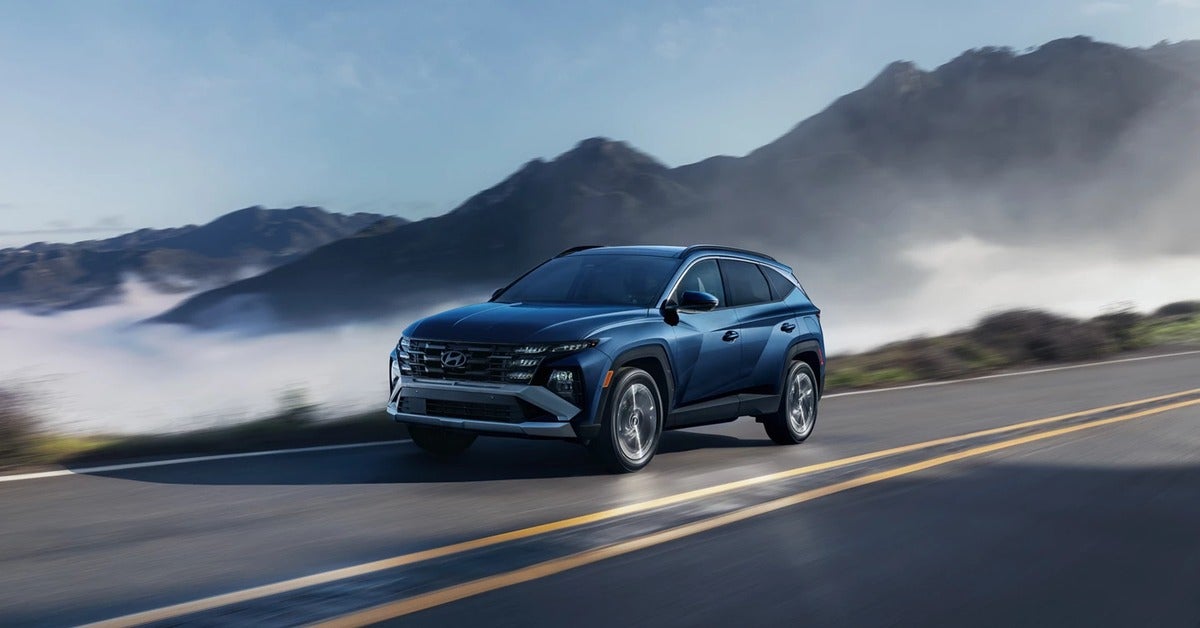
Blue Hyundai Tucson driving on a mountain road with low clouds, exterior view

How to Shop Used Cars at Korum's Puyallup Pre-Owned Center

By Korum Automotive Team · Published October 31, 2026 Shopping for used cars can feel like a guessing game, but it gets easier when you know how a dealer group sorts its inventory. Korum Automotive in Puyallup sells new Ford, Hyundai and Lincoln models, and it also runs a separate Pre-Owned store that carries used vehicles of many makes. This guide walks you through how that setup works, what the factory certified programs mean and how to shop with confidence before you ever step onto the lot. How Korum's Used Inventory Is Organized Korum has four sales locations in Puyallup. Korum Ford is at 100 River Road, Korum Hyundai is at 111 River Road and Korum Lincoln is at 150 River Road. Korum Pre-Owned has its own lot at 711 North Meridian. All four share one main sales line, so one call can reach any of them. The group says it serves the Sumner, Tacoma, Auburn and South Hill area, so most shoppers in the South Sound are a short drive away. The Pre-Owned store is the place to start if you are open to more than one brand. Trade-ins arrive at a dealer group from all kinds of owners, so a used lot can hold a Ford pickup next to a Japanese sedan and a Korean crossover. Korum says it offers a large selection of used vehicles across many makes, models and budgets. That variety is the main reason to shop a group instead of a single brand store. You can line up very different vehicles side by side on the same afternoon. Why brand stores still matter for used shoppers Each brand store focuses on its own badge, and that is where factory certified vehicles get inspected by technicians trained on that brand. If you already know you want a certified Ford, Hyundai or Lincoln, ask which location holds the vehicle you found online. The listing usually tells you, and a quick call saves you a trip to the wrong building. Certified, Brand Used and Everything Else Used vehicles at a franchise group fall into a few broad groups. Knowing which group a car belongs to tells you how it was inspected and what coverage comes with it. Factory certified. These vehicles meet a manufacturer's age and mileage rules and pass that brand's inspection. Ford says its Gold Certified vehicles must be no more than 6 years old with less than 80,000 miles and must pass a 172-point inspection. Hyundai lists a 173-point inspection for its Certified Used Vehicles. Lincoln's Signature tier uses a 200-point inspection. Other used vehicles. Cars that fall outside a factory program, or that are a different brand, are sold as regular used vehicles. They can still be great buys. You just need to do a little more homework on condition and history. Older or higher mileage vehicles. These often make sense for a first car, a second commuter or a work truck. Budget for maintenance and ask what the dealer has already serviced. Certified coverage terms vary by brand and tier, so read the paperwork for the exact vehicle. The salesperson can show you the certification checklist that was completed for that car. When certified is worth it Certified vehicles tend to be newer and lower in mileage, and they come with factory backed coverage that a regular used car does not. That matters most if you plan to keep the vehicle for many years, if you drive a lot of miles or if you simply want fewer surprises. A certified car also has a documented inspection, which gives you a written record of what was checked. A regular used car can make more sense if you want an older model, a different brand or a vehicle with higher miles that still has life left. In that case, put more weight on the history report, service records and your own test drive. Some shoppers also pay an independent mechanic for a pre-purchase inspection, which you can ask about before you commit. Start Your Search for Used Cars Online Most shoppers now narrow the field from home. Korum's used inventory search lets you filter by make, model, body style, mileage and features. Here is a simple routine that keeps the search focused. Pick a body style first. Decide between a sedan, SUV, truck or minivan before you look at brands. It cuts the list fast. Set a mileage ceiling. Lower miles usually mean more years of life left, but a well kept higher mileage vehicle can still be a smart choice. Check the photos closely. Look at the seats, steering wheel and tires. Wear in those spots tells you how the car was used. Save three to five favorites. A short list makes the visit efficient and gives you backups if one sells. Read the vehicle details. Look for the certified badge, the trim name and listed options so you compare like with like. Reading a listing carefully Two vehicles with the same model name can be very different. Trim level decides the engine, the drive system and much of the equipment. Compare the trim names on your short list, then check the feature list for the items you care about most, such as heated seats, a power liftgate or a backup camera. If a feature is not listed, ask before you drive over to see it. Korum's site says you can find a vehicle on its website and choose whether to complete the whole process online without interacting with a team member, or have one of its used car specialists walk you through the details of the vehicle. If you like to see a car in person first, you can still do most of the research at home and come in only for the test drive and paperwork. Plan Your Budget Without the Guesswork The sticker on a used car is only one part of what you will spend. Think about the full cost of owning the vehicle for the next few years. Fuel Fuel use varies a lot between a compact sedan and a full size truck. The federal site fueleconomy.gov lists ratings for vehicles from 1984 through the current model year, so you can check any used car on your list. Compare the combined rating of each finalist and think about how many miles you drive each week. Insurance Call your insurance agent with the VINs of your top choices. Rates can vary a lot between models with similar sticker prices, and it is better to know before you sign. Maintenance and tires Ask when the tires, brakes and battery were last replaced. A car that needs tires soon will cost more in its first year than one that just got them. Service records, if the previous owner kept them, are worth reading line by line. Korum says its Service and Parts Departments offer extended hours, which can make it easier to fit a pre-delivery check or a first oil change around your workday. Financing If you plan to finance, get pre-qualified so you know your range before you shop. Korum offers an online finance application, and the finance team can explain your options in plain terms. Keep the conversation focused on the total amount you will pay over the loan, not just the payment. Your current car Many used car shoppers have a vehicle to replace. Korum offers a Kelley Blue Book Instant Cash Offer tool on its site, and the group also says it will buy your car even if you do not buy one from them. Gather your title or loan information, both sets of keys and any service records before you come in. That makes the appraisal faster and keeps the visit on schedule. Check History, Recalls and Condition Every used vehicle has a story. Your job is to read as much of it as you can before you buy. Vehicle history report. Ask for the report and look for accidents, title problems, ownership count and service entries. Ford's Gold Certified checklist includes obtaining a vehicle history report. Open recalls. The National Highway Traffic Safety Administration lets you check any vehicle for unrepaired safety recalls. NHTSA says that when you search by license plate or VIN, you learn if a specific vehicle needs to be repaired as part of a recall. The search is free, and recall repairs are done at no charge by an authorized dealer for that brand. Physical inspection. Walk around the car in daylight. Look for uneven panel gaps, paint that does not match and tires worn more on one edge than the other. Test drive. Drive on roads you know. Include a highway on-ramp, a rough patch and some stop and go traffic. Questions to ask about reconditioning Dealers usually service a used vehicle before they put it on the lot. Ask what was done to the car you like. Useful questions include: Were the tires or brakes replaced, and how much tread or pad is left? Was the oil changed and were the fluids topped off? Were any warning lights or stored codes found and repaired? How many keys come with the vehicle? Are the owner's manual and any service records included? If anything feels off, ask more questions. A good dealer will tell you what was reconditioned and why, and will show you the paperwork. Match the Vehicle to How You Drive in the South Sound The right used vehicle fits your week, not just your wish list, so think about where you actually go. If you spend a lot of time on Highway 167 or Highway 512, comfort and fuel use matter most, and a midsize sedan or compact SUV with driver assistance features can make traffic less tiring. Adaptive cruise control helps if your commute includes long slowdowns. Mount Rainier, the passes and the coast are all within reach of Puyallup, so if you plan winter trips, all wheel drive or four wheel drive plus good tires gives you more grip. Tires matter as much as the drive system, so check tread depth on any vehicle you consider. If you have kids in car seats, bring the seats to the test drive, see how easy a third row is to reach, and check where the lower anchors and top tether points sit. If the vehicle is for a new driver, look for good crash test ratings, modern driver assistance features and a size that is easy to park, and check insurance costs for a young driver before you decide. Hauling and towing If you pull a boat to a nearby lake or haul yard waste, a pickup or a body on frame SUV may fit better than a crossover. Check the tow rating in the owner's manual for the exact vehicle, since it changes with engine, axle and equipment. Visit Korum Pre-Owned in Puyallup When your short list is ready, call ahead to confirm the vehicles are still on the lot and ask which location has them. Bring your driver's license, insurance card and any trade-in paperwork. To see the full group, start at the Korum Automotive home page or read more about the Korum team. Then schedule a test drive and see how your top choice feels on Puyallup roads. Quick Recap for Used Car Shoppers Start at Korum Pre-Owned if you want to compare several brands at once. Ask whether a vehicle is factory certified and which inspection it passed. Do your research online and save a short list before you visit. Check the history report and run the VIN for open recalls. Budget for fuel, insurance and upcoming maintenance, not only the sticker. Bring your trade-in paperwork so the appraisal goes quickly. Frequently Asked Questions Does Korum sell used cars from brands other than Ford, Hyundai and Lincoln? Yes. Korum Pre-Owned at 711 North Meridian carries used vehicles of many makes because trade-ins come in from every brand. Check the online used inventory and filter by make to see what is available right now. What is the difference between a certified used car and a regular used car? A certified vehicle meets the manufacturer's age and mileage rules and passes that brand's multi point inspection, and it comes with factory backed coverage. A regular used car is sold without that factory program. Both can be good buys, but a certified car comes with more documented checks. Can I buy a used car from Korum without visiting in person? Korum's website says shoppers can complete the whole process online without interacting with a team member. Many people still prefer to see and drive the car first. You can research, apply for financing and value your trade online, then visit only for the final steps. How do I check a used car for open recalls? Find the 17-character VIN on the windshield or the driver's door jamb and enter it in NHTSA's free recall lookup. The results show any unrepaired safety recalls. An authorized dealer for that brand performs recall repairs at no charge. Sources (as of October 30, 2026) Ford Blue Advantage Certified Used Vehicles (as of October 20, 2026) Hyundai Certified Used Vehicles (as of October 20, 2026) Lincoln Certified Pre-Owned Program | Kelley Blue Book (as of October 20, 2026) Used Cars | Korum Automotive Group (as of October 30, 2026) About Korum Automotive Group (as of October 30, 2026) Finance | Korum Automotive Group (as of October 30, 2026) Check for Recalls | NHTSA (as of October 30, 2026) Customer is responsible for sales tax, title, and license fee. A negotiable $200 documentation fee may be applied.